
Rainwater conveyance-the system of gutters and downspouts that moves water from roofs to a storm sewer system- can become an integral part of architecture when it is treated not just as a technical drainage requirement, but as a visible, functional, and aesthetic element of the building and landscape.
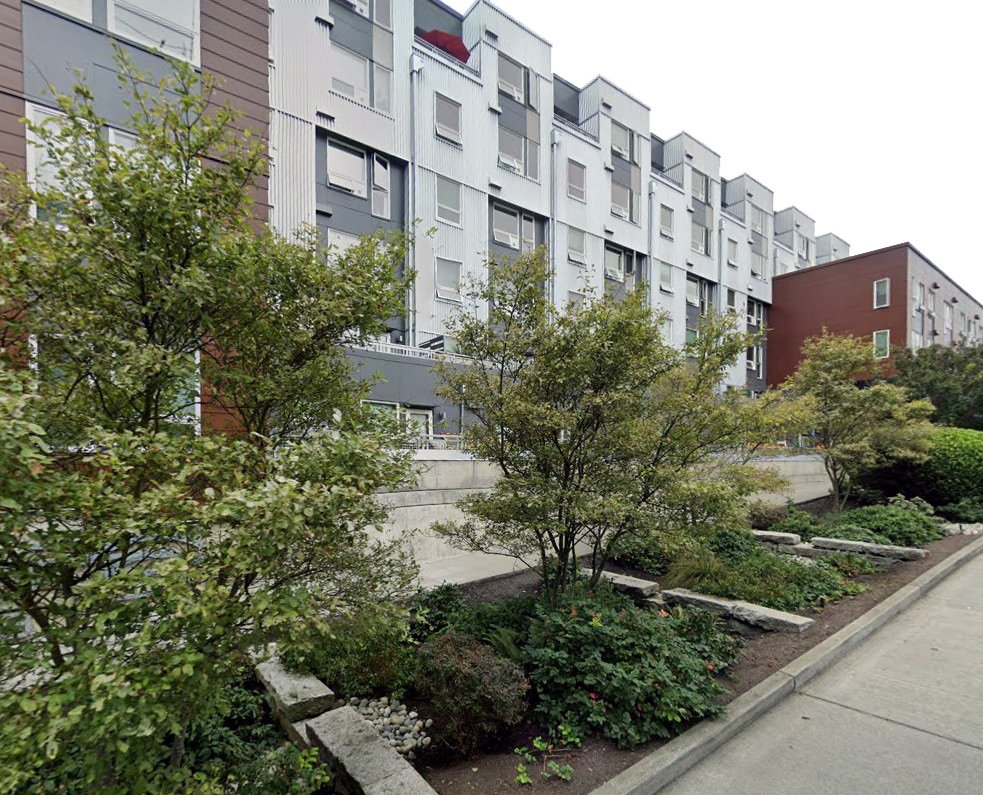
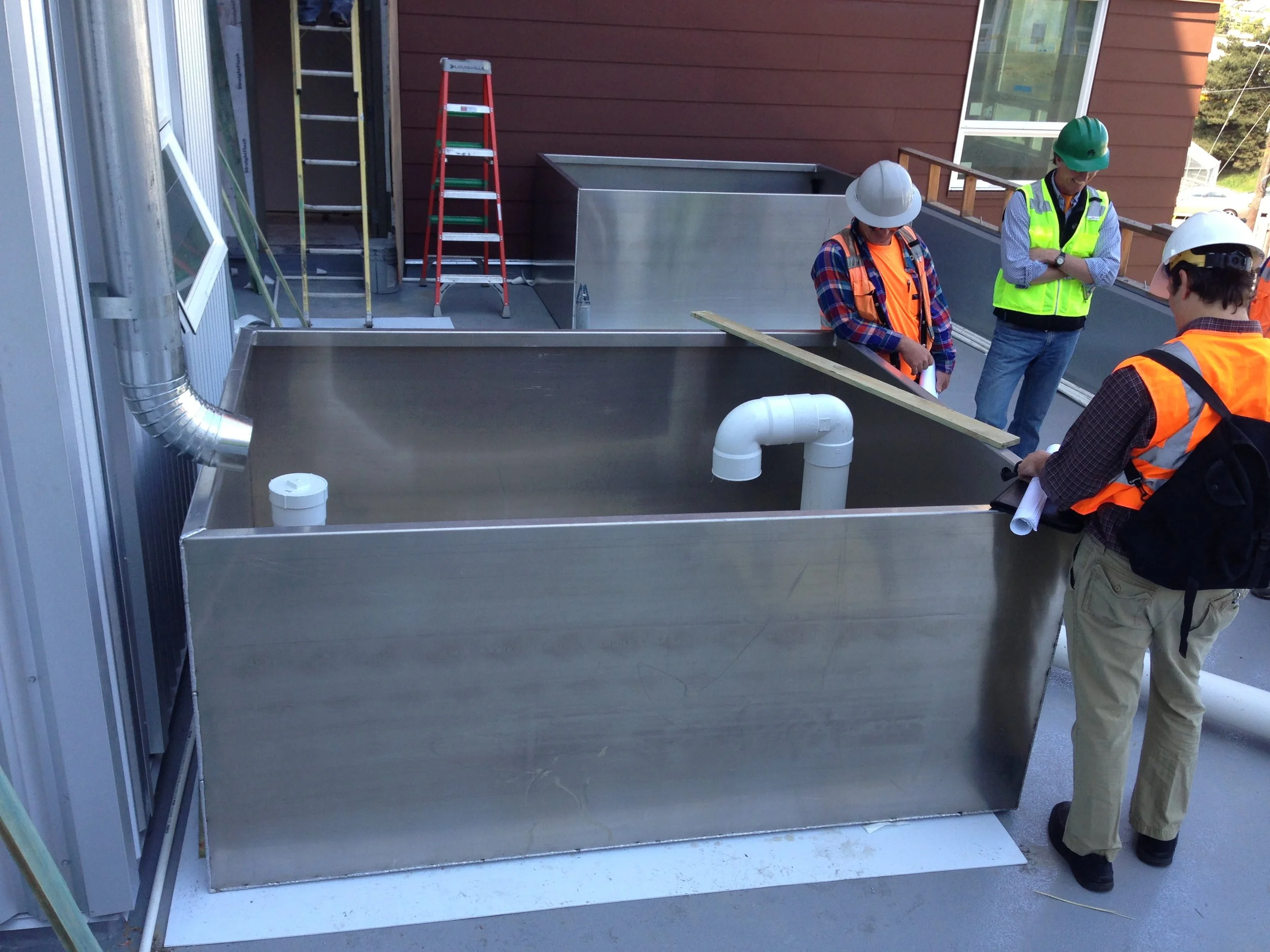
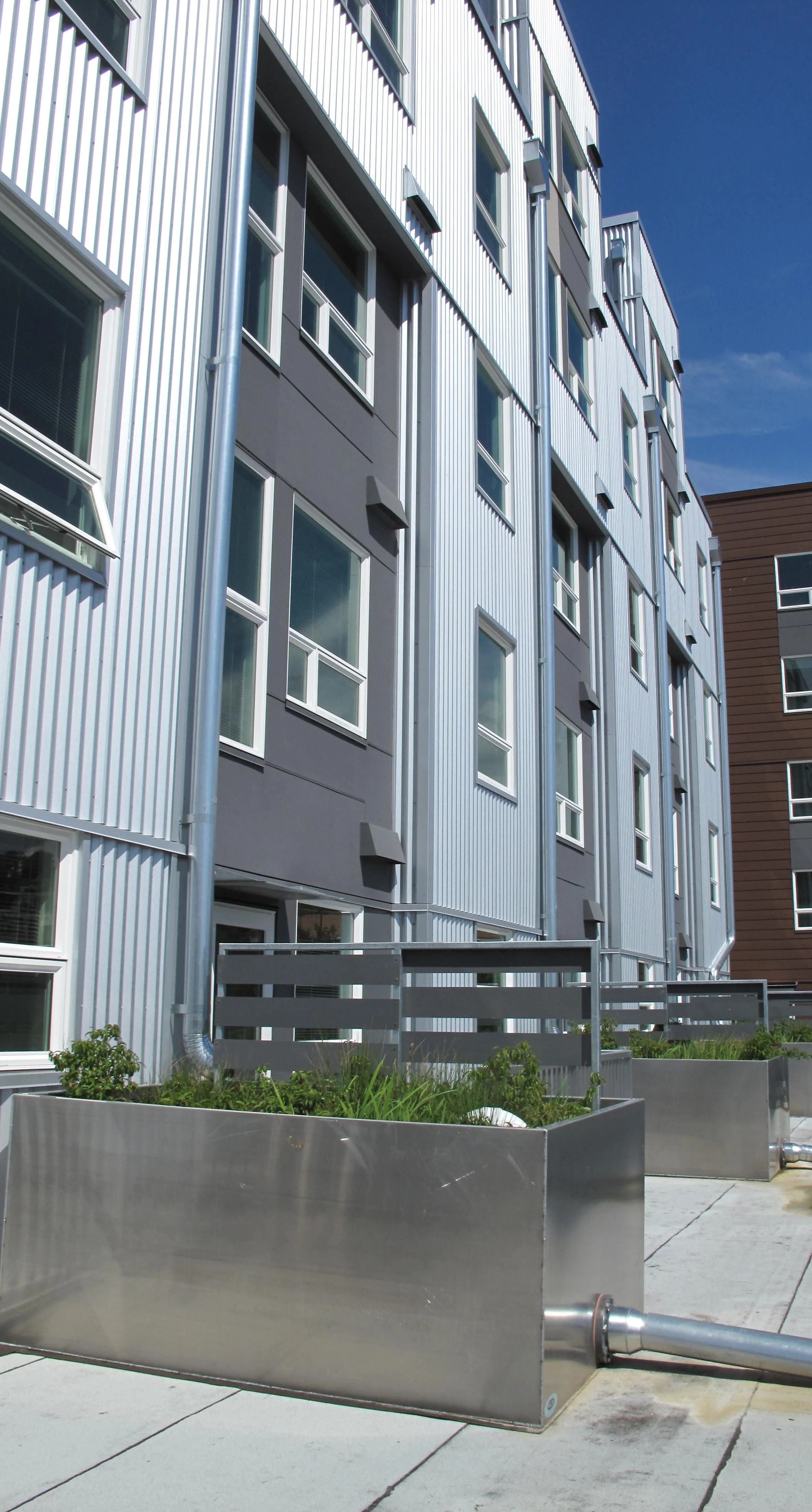
The above images are of the Slate Apartments, showing several rainwater integration strategies. Rather than using internal hidden roof drains, we sloped the roofs outward so rainwater is moved through scuppers and downspouts that contribute to the articulation of the facade, breaking down the scale of the building. The downspouts in turn feed 2nd floor balcony planters, which control the flow of stormwater, filter out pollutants, support plantings, and provide a visual screen between neighbors' patios.
Additionally, the top image is of one of several raingardens in the medians around the site. Designed by the landscape architect on the project, Windrose, these collect and store stormwater runoff until it can infiltrate the soil, filtering pollution, reducing flooding, and supporting thriving native plantings that create an attractive pedestrian environment. A series of weirs made from reclaimed granite street curbs allows for even rainwater distribution in a sloped raingarden and provide an interesting design element.
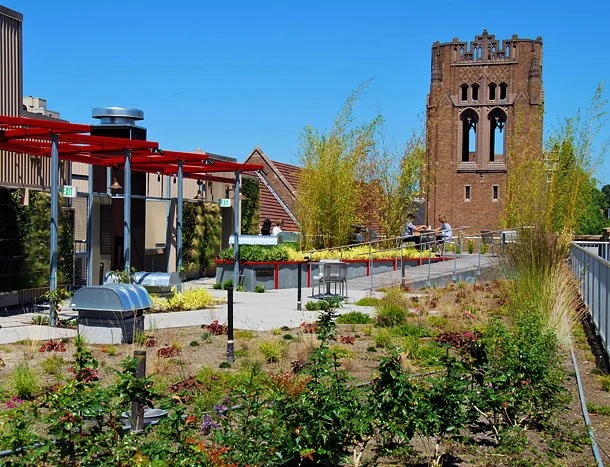
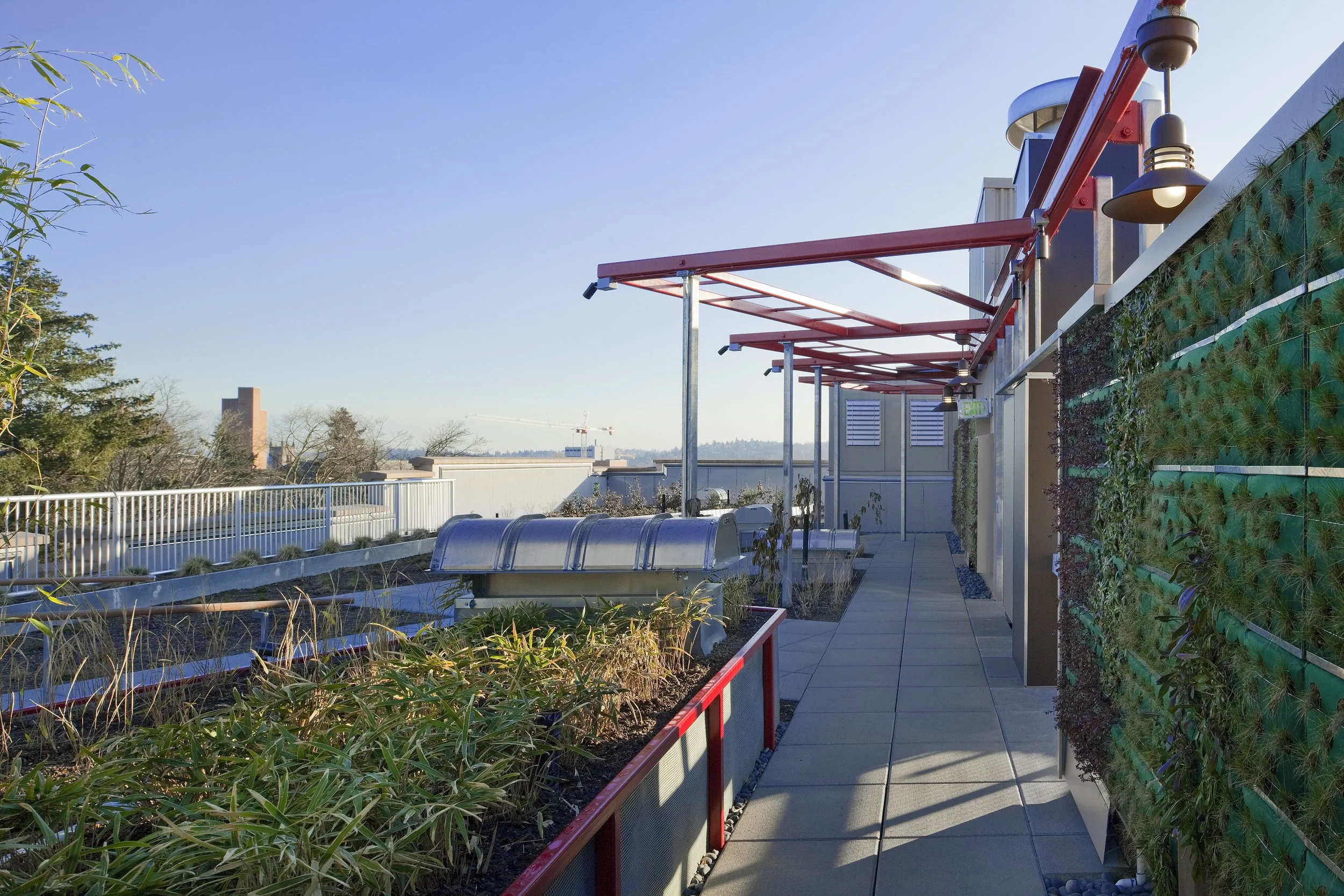
We incorporated a green roof into the design of George Russell Hall (above). In addition to filtering pollutants from stormwater and slowing its flow in to the storm sewer system, it contributes to an attractive rooftop amenity space for the residents.
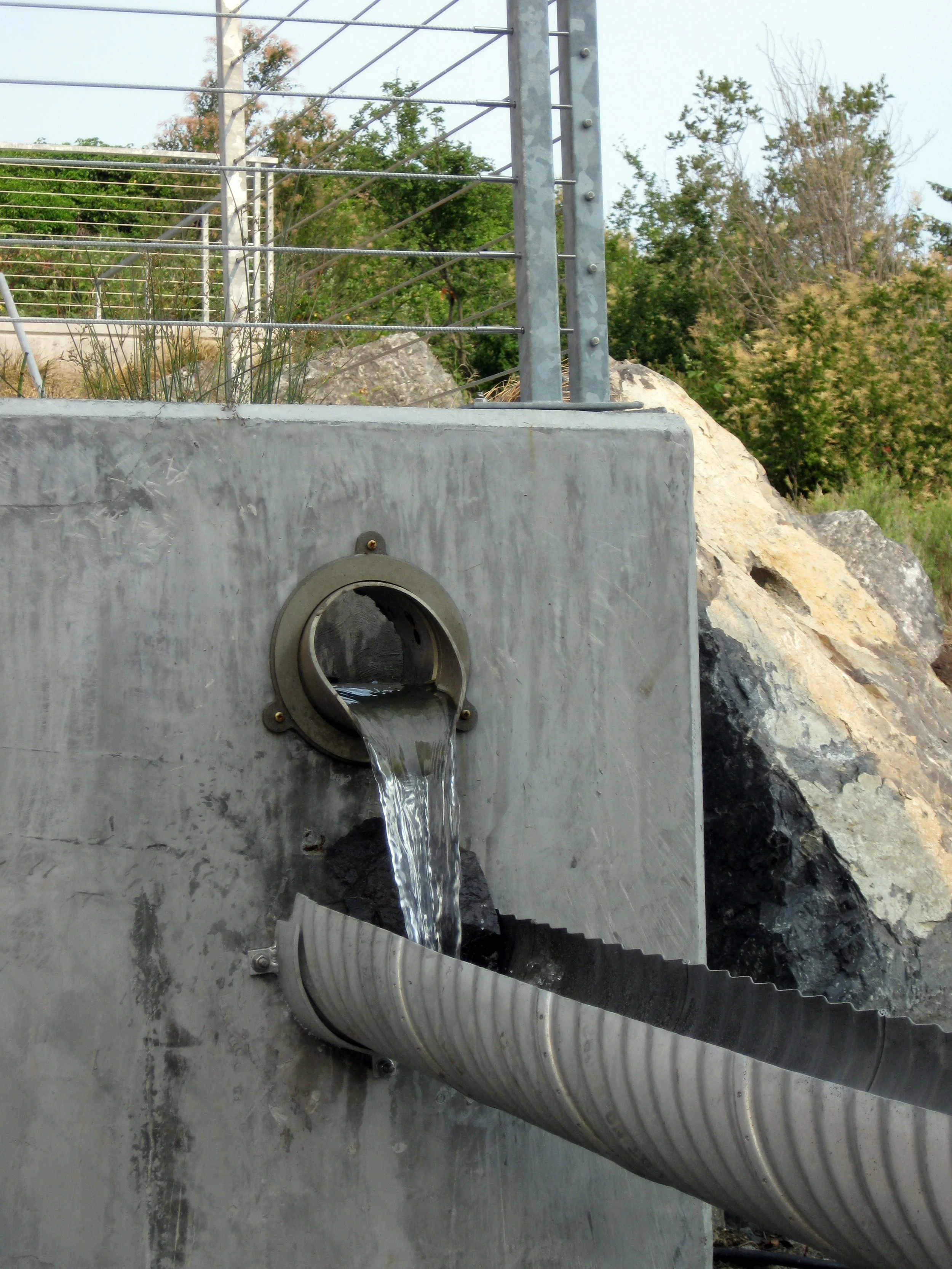
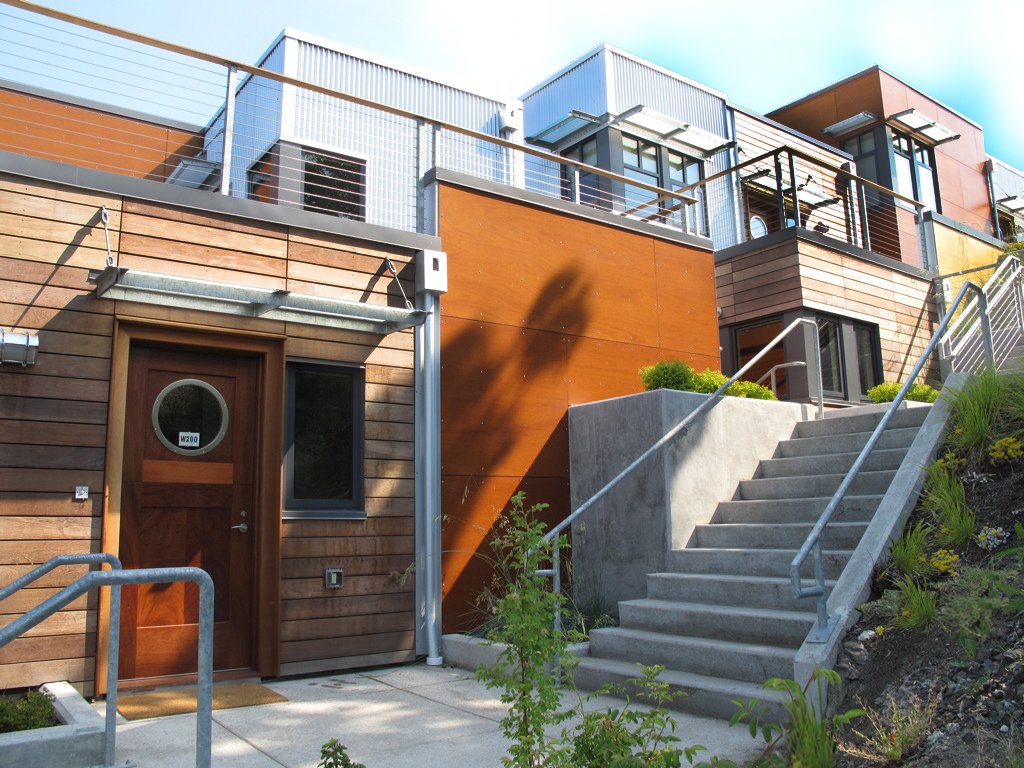
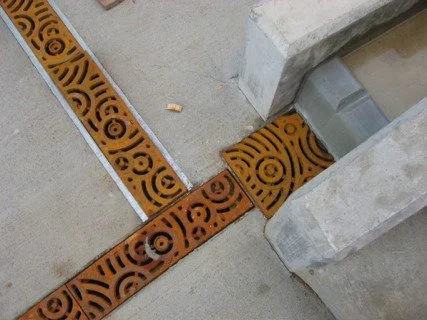
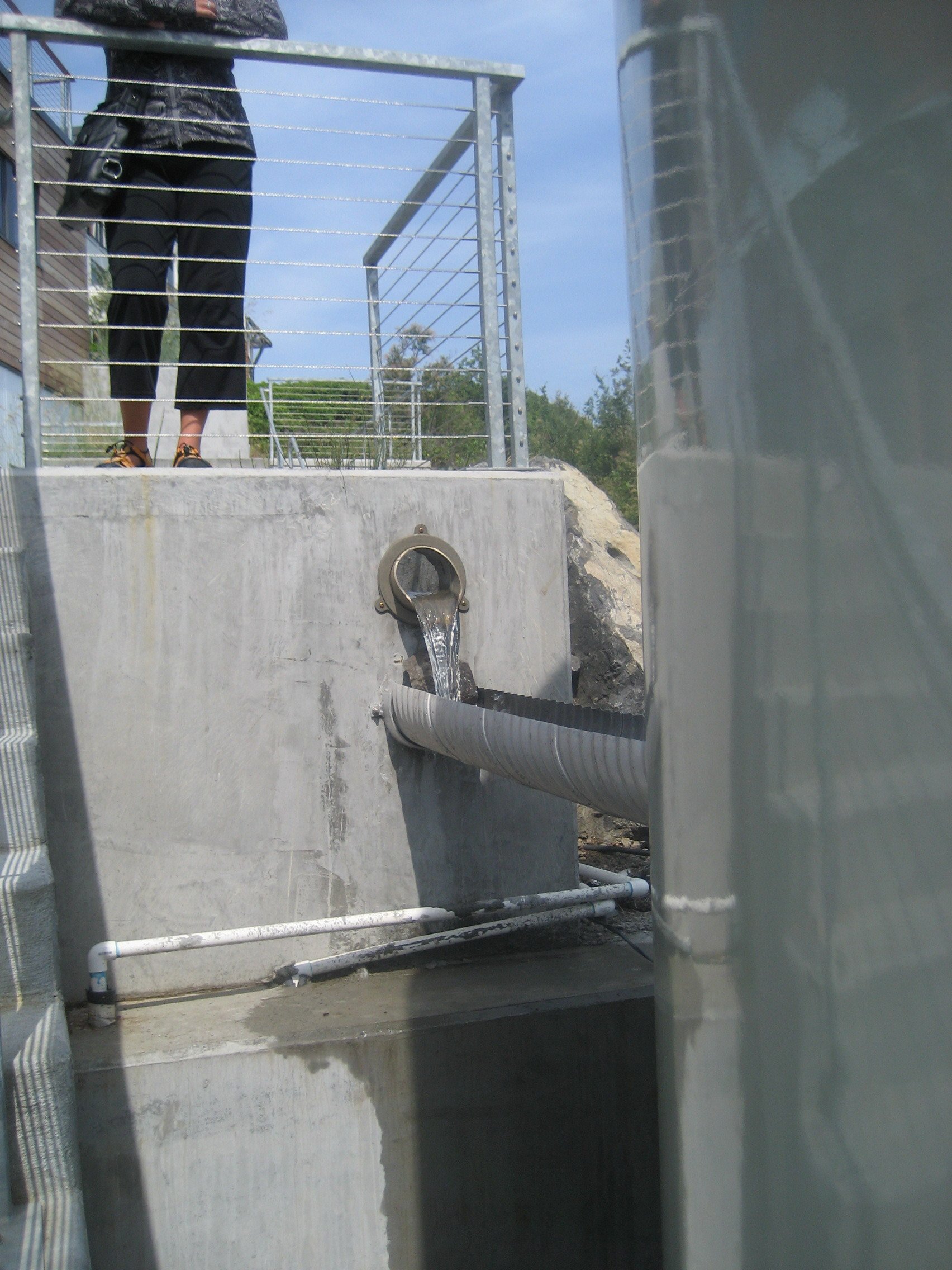
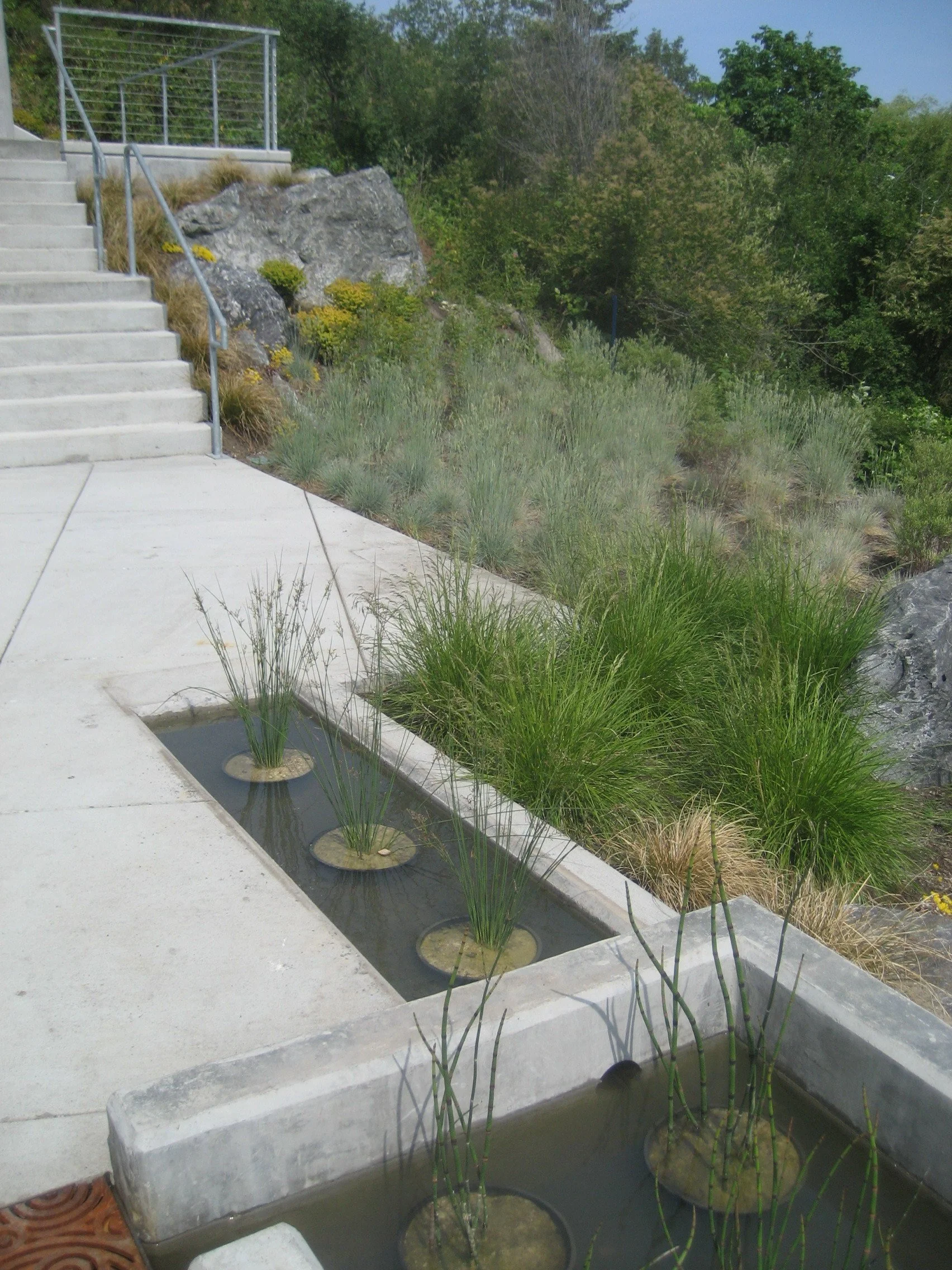
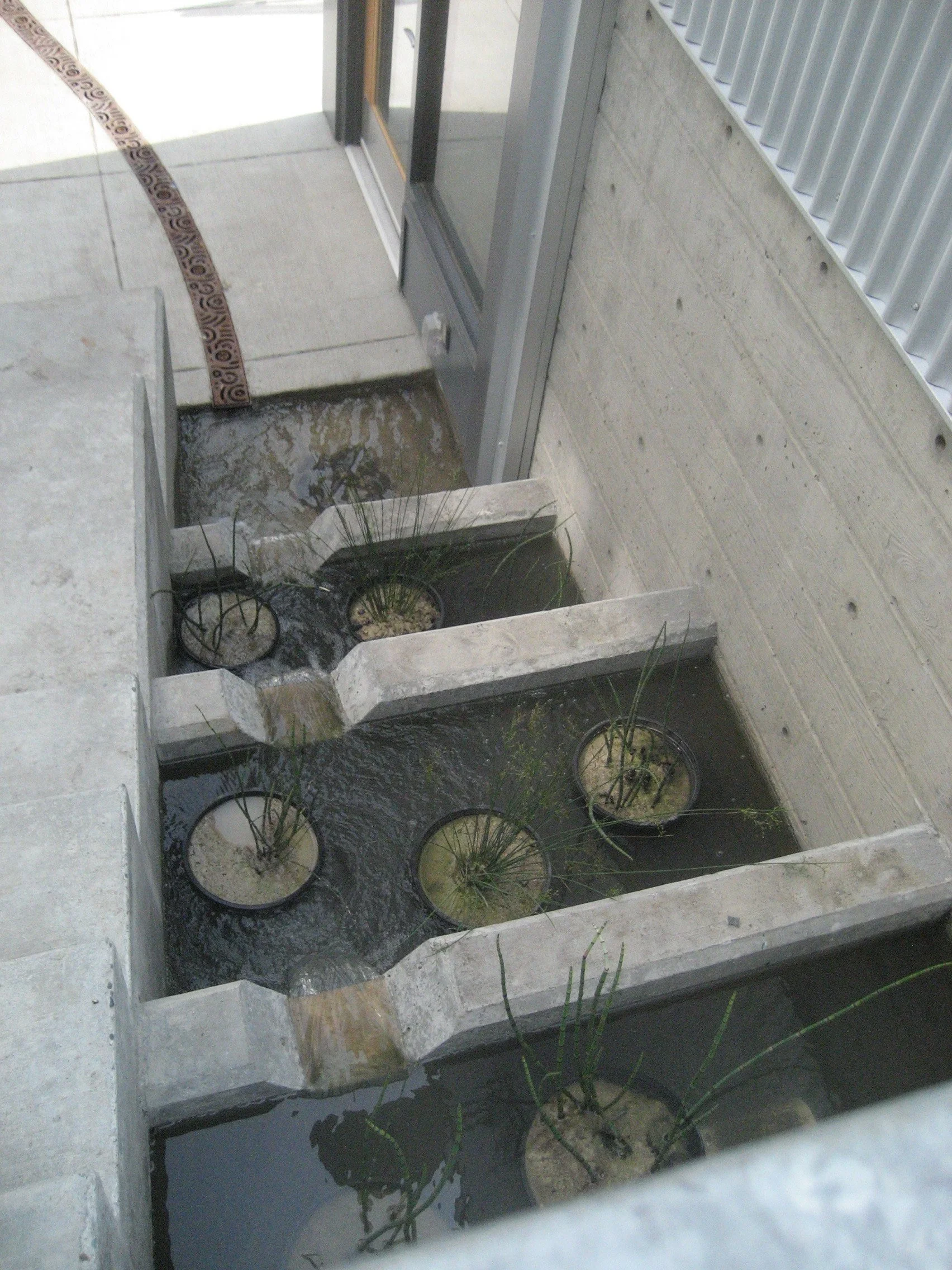
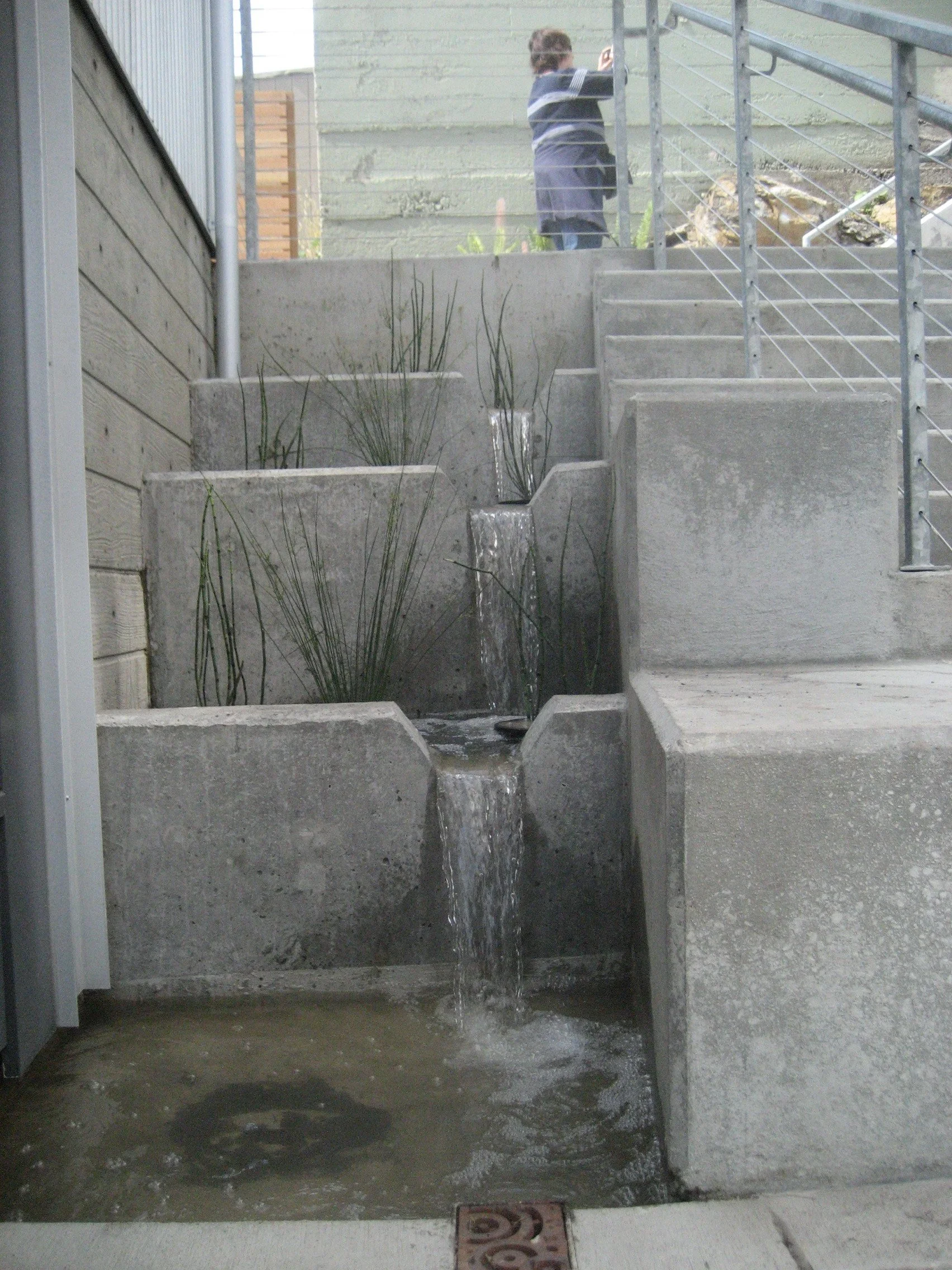
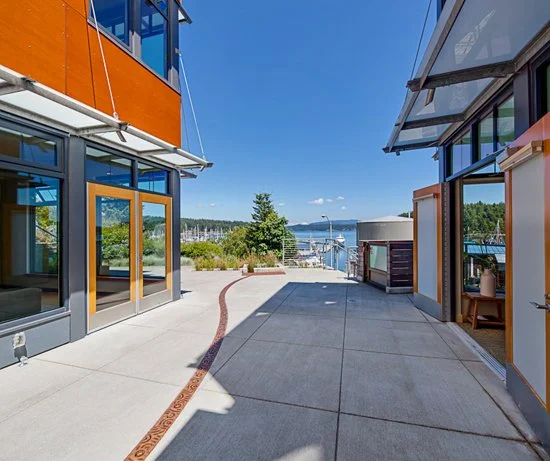
I was part of the design team at a previous firm, GGLO, that designed what is now The Island Inn in Friday Harbor. Our integrated team of architects and landscape architects designed this from the beginning to make rainwater conveyance a key part of the whole design concept. Visually expressive scuppers and downspouts move roof rainwater down to a series of runnels, down the 40 foot slope of the site, through planted areas, and eventually into a giant retention tank at the foot of the project site. It's a design meant to celebrate what is usually treated as a technical requirement, integrating attractive landscape and paying an homage to the industrial history of the site.
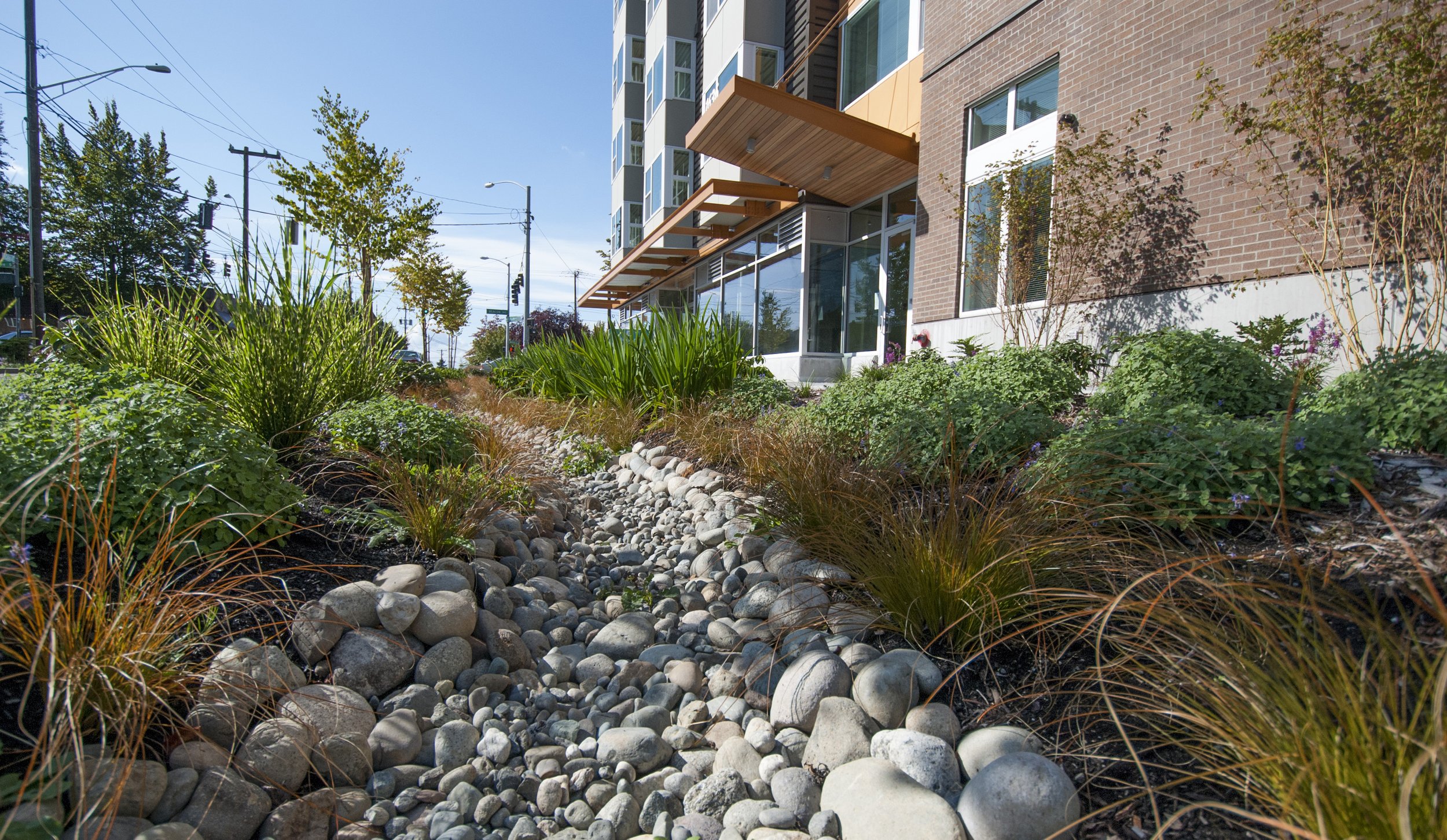
Finally, here’s another example of how a raingarden can help create an attractive pedestrian environment, this time at Denning Apartments,. The raingarden supports thriving native plantings that tolerate both wet and dry conditions while filtering pollution and reducing runoff. Landscape architecture by Murase.
